Amy Novak
Home
About Me
Designing a clearer, more trustworthy EV charging experience
Efuel
UX & UI
2022-23
Context
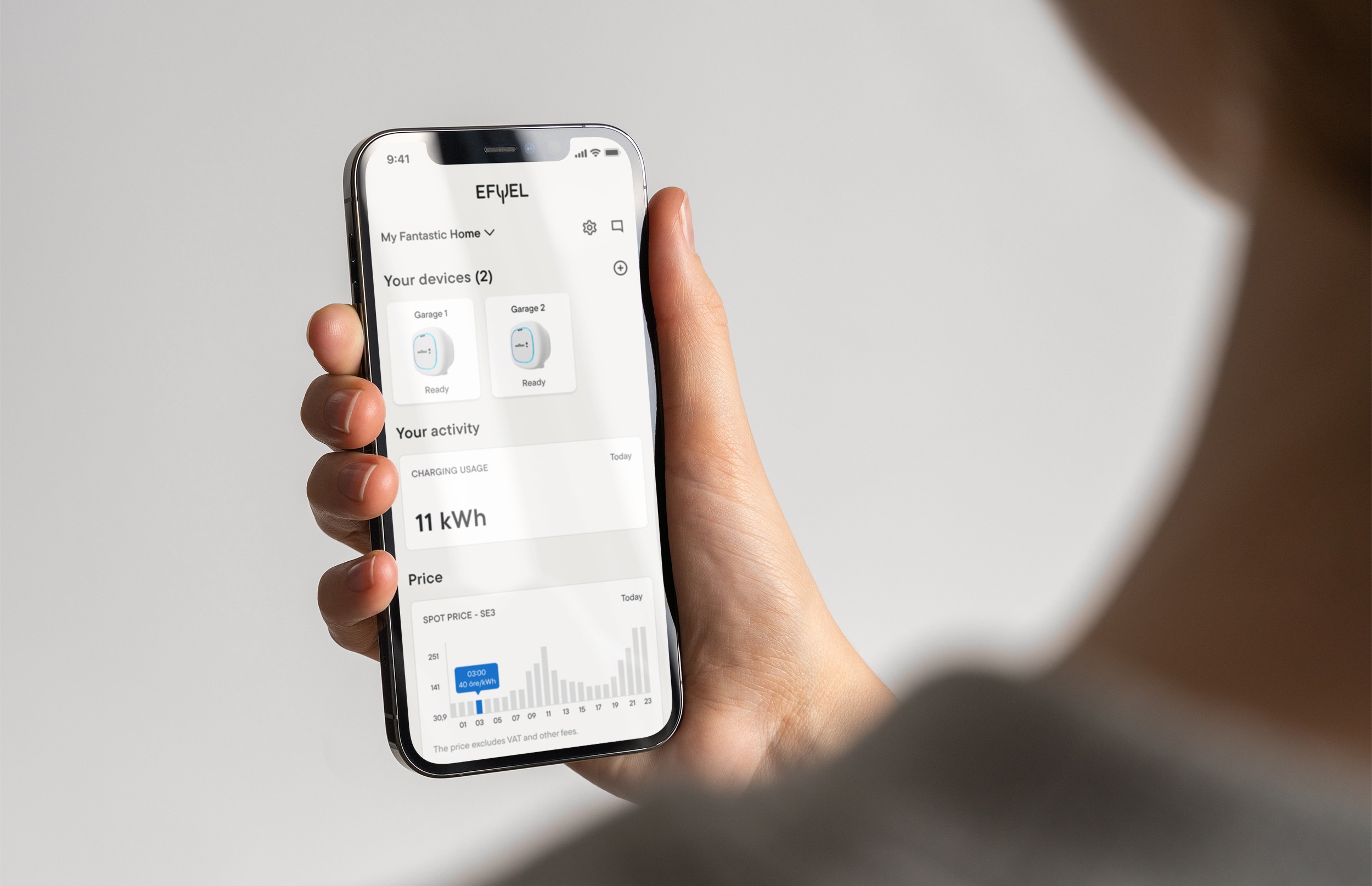
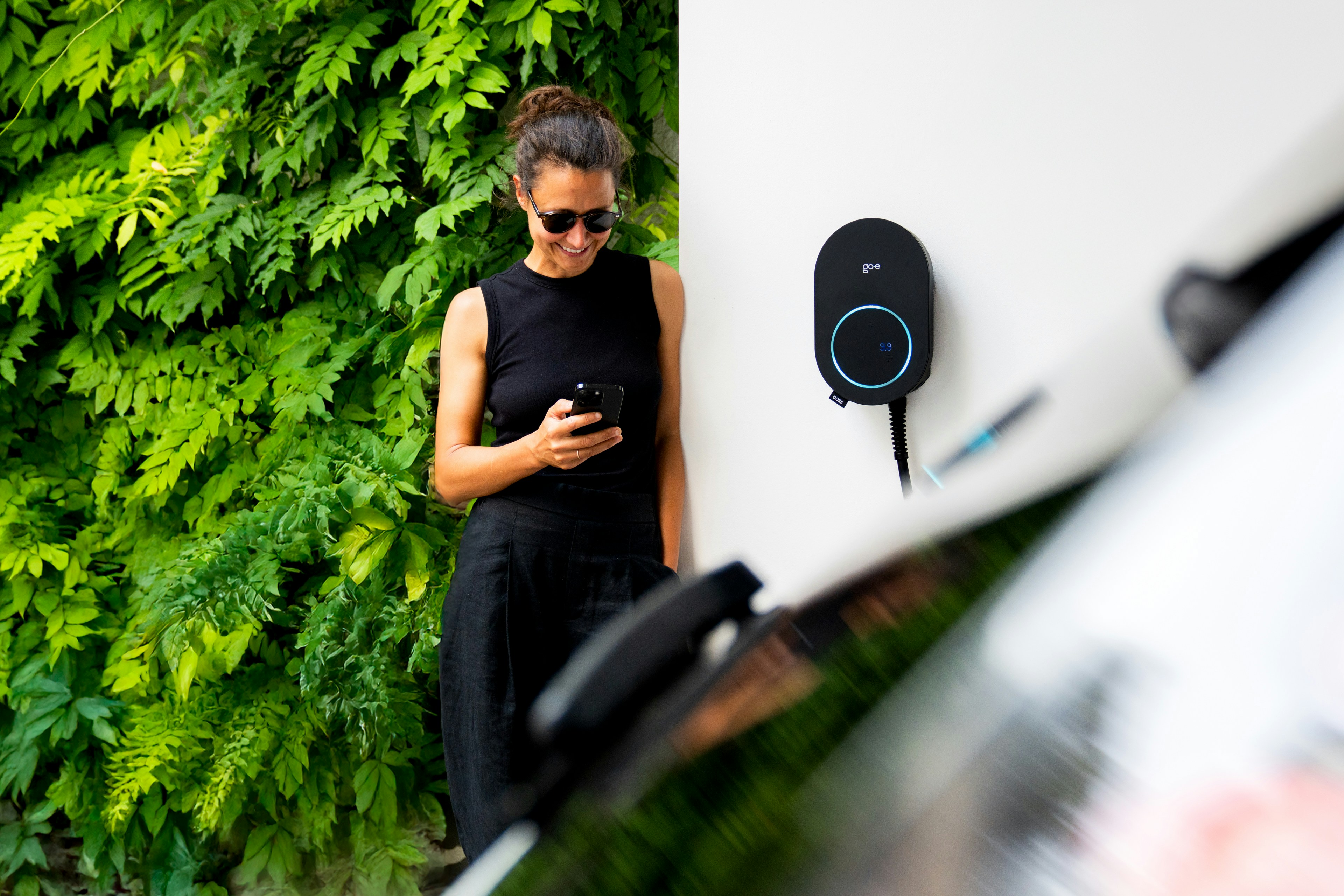
Efuel sells and install e-car chargers. They also provide an app that helps EV owners monitor and manage home EV charging. The app is the primary way users understand their energy usage, costs, and status for their charger.
Challenge / Process and Methods
A weak foundation for a growing ambition
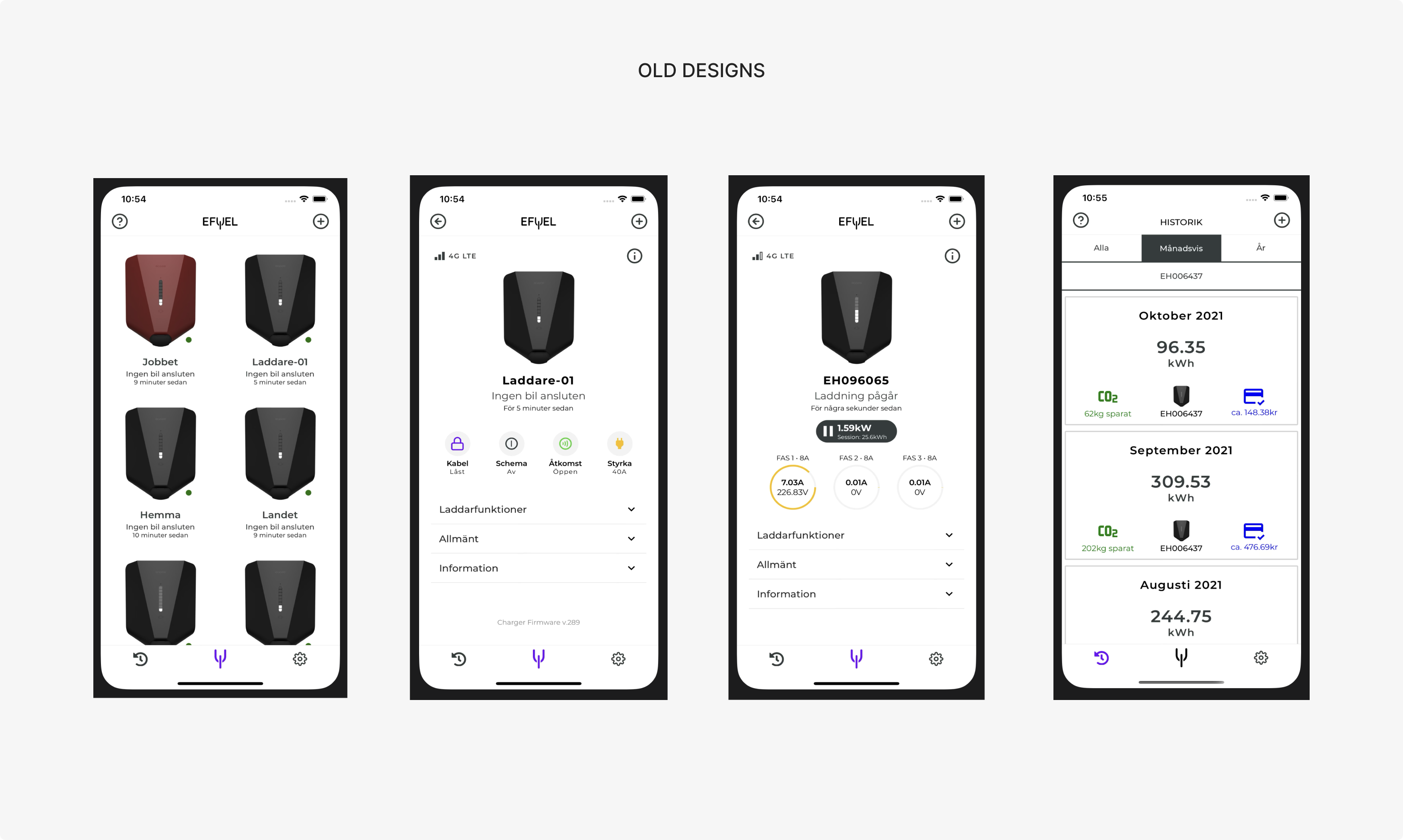
When I joined, Efuel had a simple and not fully thought-through app and big ambitions to turn it from basic EV charger controler into a broader home energy hub — helping households understand and reduce their overall electricity consumption. But the existing app wasn't ready for that journey yet.
- The hierarchy was unclear, with no thought given to what information users wanted or needed to see and in what order.
- Features like scheduling existed but weren't connected to the electricity price data that would make them meaningful.
- Visually and structurally, the design couldn't scale to support the product's bigger aspirations.
The challenge was to redesign the foundations of the app — creating an experience that was immediately clearer for all EV users and more trustworthy, while being built for extendability for the company's future ambitions.
Process and Methods
Research-led, from expert context to user truth
I started by synthesising existing installer and customer support interviews to understand the technical landscape and common pain-points, using that to sharpen my focus before speaking to users directly.
From there, I conducted my own interviews with EV owners — which revealed something that reframed the whole project: users weren't motivated by energy data itself, but by what it could do for them. Saving money was the real job of the app.
I validated key design decisions through multiple rounds of prototype testing, and worked closely with product and engineering throughout to ensure what we designed was technically feasible without sacrificing clarity.

Key Insights
From charger management to energy ownership
The research was clear:
EV owners struggled to connect raw energy data to anything meaningful: costs, outcomes, decisions.
The average home EV charger owner didn't want granular control over their charger – they wanted clarity and reassurance in their day-to-day, with details available only when they needed it.
This shifted the focus from adding functionality to clarifying meaning. The real job of the app wasn't charger management, it was helping users understand, trust, and take ownership of their energy usage.
Additionally, their concern didn't stop at the car, it extended to the whole household energy bill. This secondary part supported the vision of turning the app into a total energy management hub.
Design decisions
Clarity at a glance, detail on demand
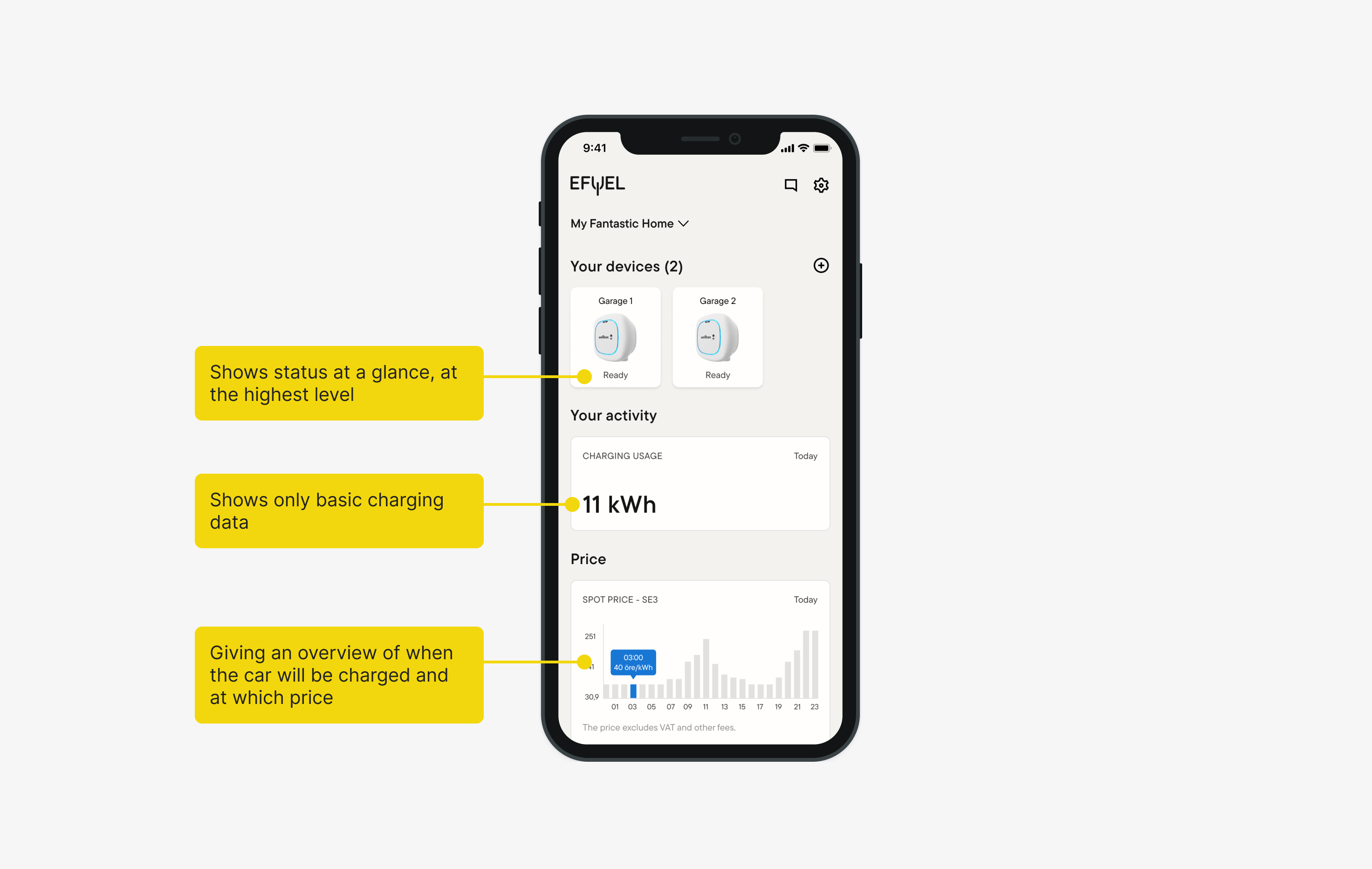
The new overview surfaced only what users needed at a glance:
- charger status,
- basic usage data,
- and spot price including when charging is scheduled to happen.
The goal wasn't to remove features entirely, but to lead with the most meaningful data and functionality that is used most often.
Move complexity to where it belongs
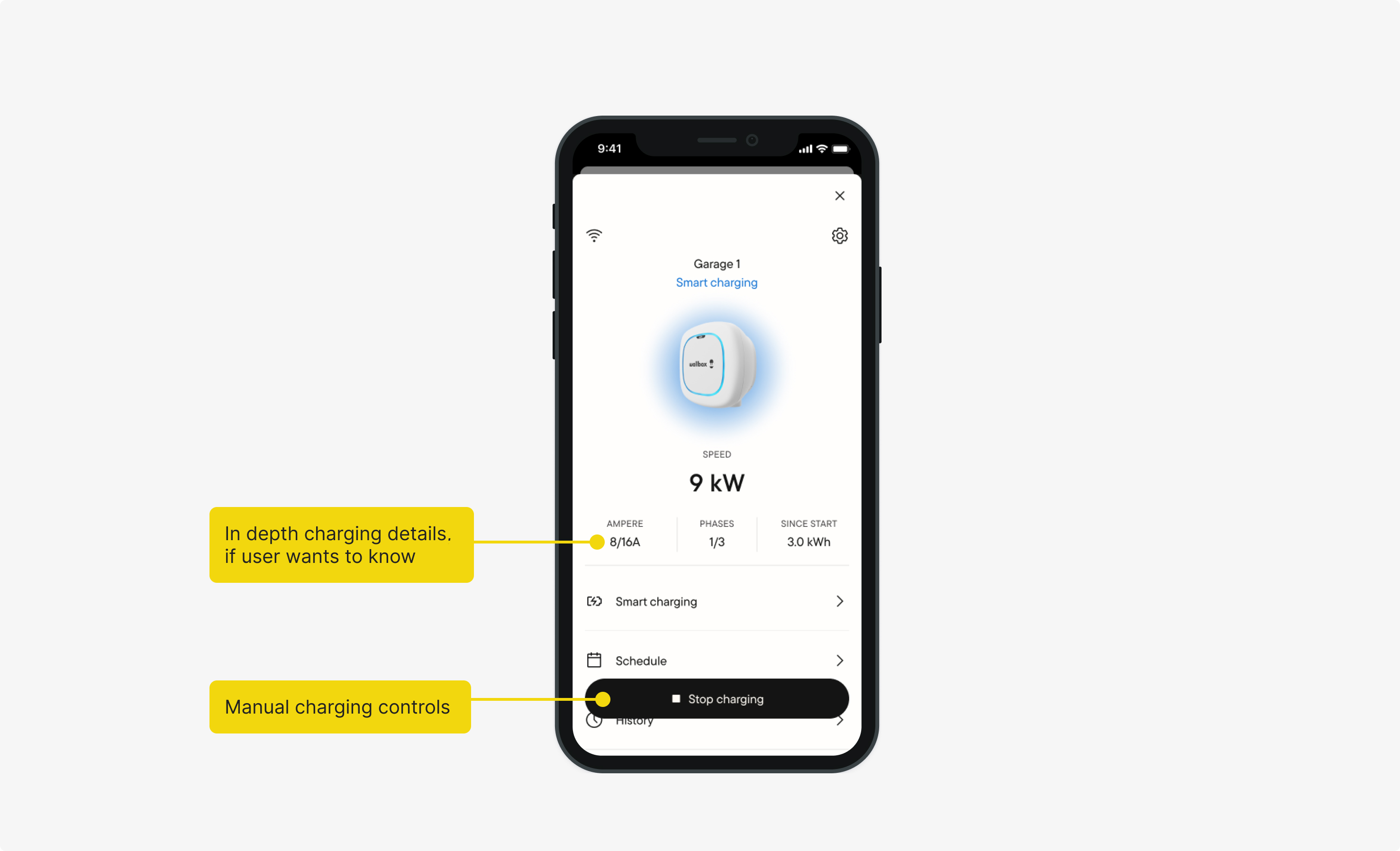
Detailed controls, in-depth charging data, and scheduling entry points moved to a secondary screen.
Research showed most users start charging with a key fob, not the app — so manual controls weren't hidden, just deprioritised for the users who rarely needed them.
Turn scheduling into a money-saving tool
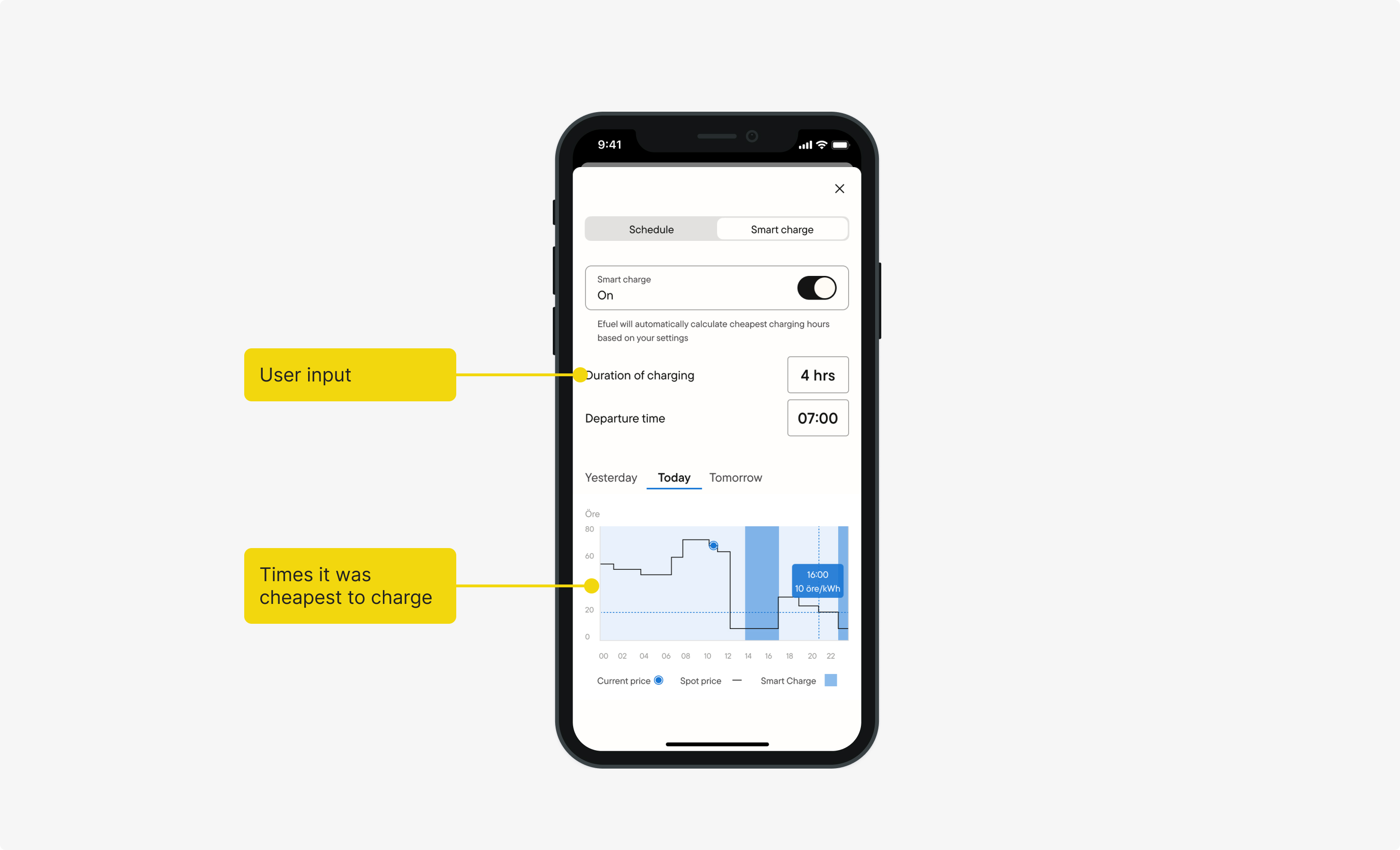
The scheduling feature already existed but wasn't connected to electricity prices — making it a timer, not a tool. The redesigned smart charging feature asks two questions: how long do you need to charge, and when do you need to leave? The app finds the cheapest window and handles the rest. A technical constraint meant battery level wasn't available, so we reframed the input around time — something users naturally think in.
Outcome
What we validated
The MVP confirmed the core hypothesis: EV owners needed help making sense of their energy costs, not just a window into charger status. The smart scheduling feature was received positively enough that the team moved forward with a pilot launch to an initial user group.
My contribution
As the sole designer for eight months, I shaped the experience from early research through to shipped design, including the reframe around energy understanding rather than charger control, and the hierarchy decisions that made that framing real in the interface.
What I would have done next
Given more time, I would have tracked usage patterns, continued to follow up with users, and kept building toward the broader vision: a complete household energy hub that helps people save money across their entire home.

Amy Novak
Home
About Me
Designing a clearer, more trustworthy EV charging experience
Efuel
UX & UI
2022-23
Context
Efuel sells and install e-car chargers. They also provide an app that helps EV owners monitor and manage home EV charging. The app is the primary way users understand their energy usage, costs, and status for their charger.
Challenge / Process and Methods
A weak foundation for a growing ambition
When I joined, Efuel had a simple and not fully thought-through app and big ambitions to turn it from basic EV charger controler into a broader home energy hub — helping households understand and reduce their overall electricity consumption. But the existing app wasn't ready for that journey yet.
- The hierarchy was unclear, with no thought given to what information users wanted or needed to see and in what order.
- Features like scheduling existed but weren't connected to the electricity price data that would make them meaningful.
- Visually and structurally, the design couldn't scale to support the product's bigger aspirations.
The challenge was to redesign the foundations of the app — creating an experience that was immediately clearer for all EV users and more trustworthy, while being built for extendability for the company's future ambitions.
Process and Methods
Research-led, from expert context to user truth
I started by synthesising existing installer and customer support interviews to understand the technical landscape and common pain-points, using that to sharpen my focus before speaking to users directly.
From there, I conducted my own interviews with EV owners — which revealed something that reframed the whole project: users weren't motivated by energy data itself, but by what it could do for them. Saving money was the real job of the app.
I validated key design decisions through multiple rounds of prototype testing, and worked closely with product and engineering throughout to ensure what we designed was technically feasible without sacrificing clarity.
Key Insights
From charger management to energy ownership
The research was clear:
EV owners struggled to connect raw energy data to anything meaningful: costs, outcomes, decisions.
The average home EV charger owner didn't want granular control over their charger – they wanted clarity and reassurance in their day-to-day, with details available only when they needed it.
This shifted the focus from adding functionality to clarifying meaning. The real job of the app wasn't charger management, it was helping users understand, trust, and take ownership of their energy usage.
Additionally, their concern didn't stop at the car, it extended to the whole household energy bill. This secondary part supported the vision of turning the app into a total energy management hub.
Design decisions
Clarity at a glance, detail on demand
The new overview surfaced only what users needed at a glance:
- charger status,
- basic usage data,
- and spot price including when charging is scheduled to happen.
The goal wasn't to remove features entirely, but to lead with the most meaningful data and functionality that is used most often.
Move complexity to where it belongs
Detailed controls, in-depth charging data, and scheduling entry points moved to a secondary screen.
Research showed most users start charging with a key fob, not the app — so manual controls weren't hidden, just deprioritised for the users who rarely needed them.
Turn scheduling into a money-saving tool
The scheduling feature already existed but wasn't connected to electricity prices — making it a timer, not a tool. The redesigned smart charging feature asks two questions: how long do you need to charge, and when do you need to leave? The app finds the cheapest window and handles the rest. A technical constraint meant battery level wasn't available, so we reframed the input around time — something users naturally think in.
Outcome
What we validated
The MVP confirmed the core hypothesis: EV owners needed help making sense of their energy costs, not just a window into charger status. The smart scheduling feature was received positively enough that the team moved forward with a pilot launch to an initial user group.
My contribution
As the sole designer for eight months, I shaped the experience from early research through to shipped design, including the reframe around energy understanding rather than charger control, and the hierarchy decisions that made that framing real in the interface.
What I would have done next
Given more time, I would have tracked usage patterns, continued to follow up with users, and kept building toward the broader vision: a complete household energy hub that helps people save money across their entire home.
Amy Novak
Home
About Me
Designing a clearer, more trustworthy EV charging experience
Efuel
UX & UI
2022-23
Context
Efuel sells and install e-car chargers. They also provide an app that helps EV owners monitor and manage home EV charging. The app is the primary way users understand their energy usage, costs, and status for their charger.
Challenge / Process and Methods
A weak foundation for a growing ambition
When I joined, Efuel had a simple and not fully thought-through app and big ambitions to turn it from basic EV charger controler into a broader home energy hub — helping households understand and reduce their overall electricity consumption. But the existing app wasn't ready for that journey yet.
- The hierarchy was unclear, with no thought given to what information users wanted or needed to see and in what order.
- Features like scheduling existed but weren't connected to the electricity price data that would make them meaningful.
- Visually and structurally, the design couldn't scale to support the product's bigger aspirations.
The challenge was to redesign the foundations of the app — creating an experience that was immediately clearer for all EV users and more trustworthy, while being built for extendability for the company's future ambitions.
Process and Methods
Research-led, from expert context to user truth
I started by synthesising existing installer and customer support interviews to understand the technical landscape and common pain-points, using that to sharpen my focus before speaking to users directly.
From there, I conducted my own interviews with EV owners — which revealed something that reframed the whole project: users weren't motivated by energy data itself, but by what it could do for them. Saving money was the real job of the app.
I validated key design decisions through multiple rounds of prototype testing, and worked closely with product and engineering throughout to ensure what we designed was technically feasible without sacrificing clarity.
Key Insights
From charger management to energy ownership
The research was clear:
EV owners struggled to connect raw energy data to anything meaningful: costs, outcomes, decisions.
The average home EV charger owner didn't want granular control over their charger – they wanted clarity and reassurance in their day-to-day, with details available only when they needed it.
This shifted the focus from adding functionality to clarifying meaning. The real job of the app wasn't charger management, it was helping users understand, trust, and take ownership of their energy usage.
Additionally, their concern didn't stop at the car, it extended to the whole household energy bill. This secondary part supported the vision of turning the app into a total energy management hub.
Design decisions
Clarity at a glance, detail on demand
The new overview surfaced only what users needed at a glance:
- charger status,
- basic usage data,
- and spot price including when charging is scheduled to happen.
The goal wasn't to remove features entirely, but to lead with the most meaningful data and functionality that is used most often.
Move complexity to where it belongs
Detailed controls, in-depth charging data, and scheduling entry points moved to a secondary screen.
Research showed most users start charging with a key fob, not the app — so manual controls weren't hidden, just deprioritised for the users who rarely needed them.
Turn scheduling into a money-saving tool
The scheduling feature already existed but wasn't connected to electricity prices — making it a timer, not a tool. The redesigned smart charging feature asks two questions: how long do you need to charge, and when do you need to leave? The app finds the cheapest window and handles the rest. A technical constraint meant battery level wasn't available, so we reframed the input around time — something users naturally think in.
Outcome
What we validated
The MVP confirmed the core hypothesis: EV owners needed help making sense of their energy costs, not just a window into charger status. The smart scheduling feature was received positively enough that the team moved forward with a pilot launch to an initial user group.
My contribution
As the sole designer for eight months, I shaped the experience from early research through to shipped design, including the reframe around energy understanding rather than charger control, and the hierarchy decisions that made that framing real in the interface.
What I would have done next
Given more time, I would have tracked usage patterns, continued to follow up with users, and kept building toward the broader vision: a complete household energy hub that helps people save money across their entire home.